
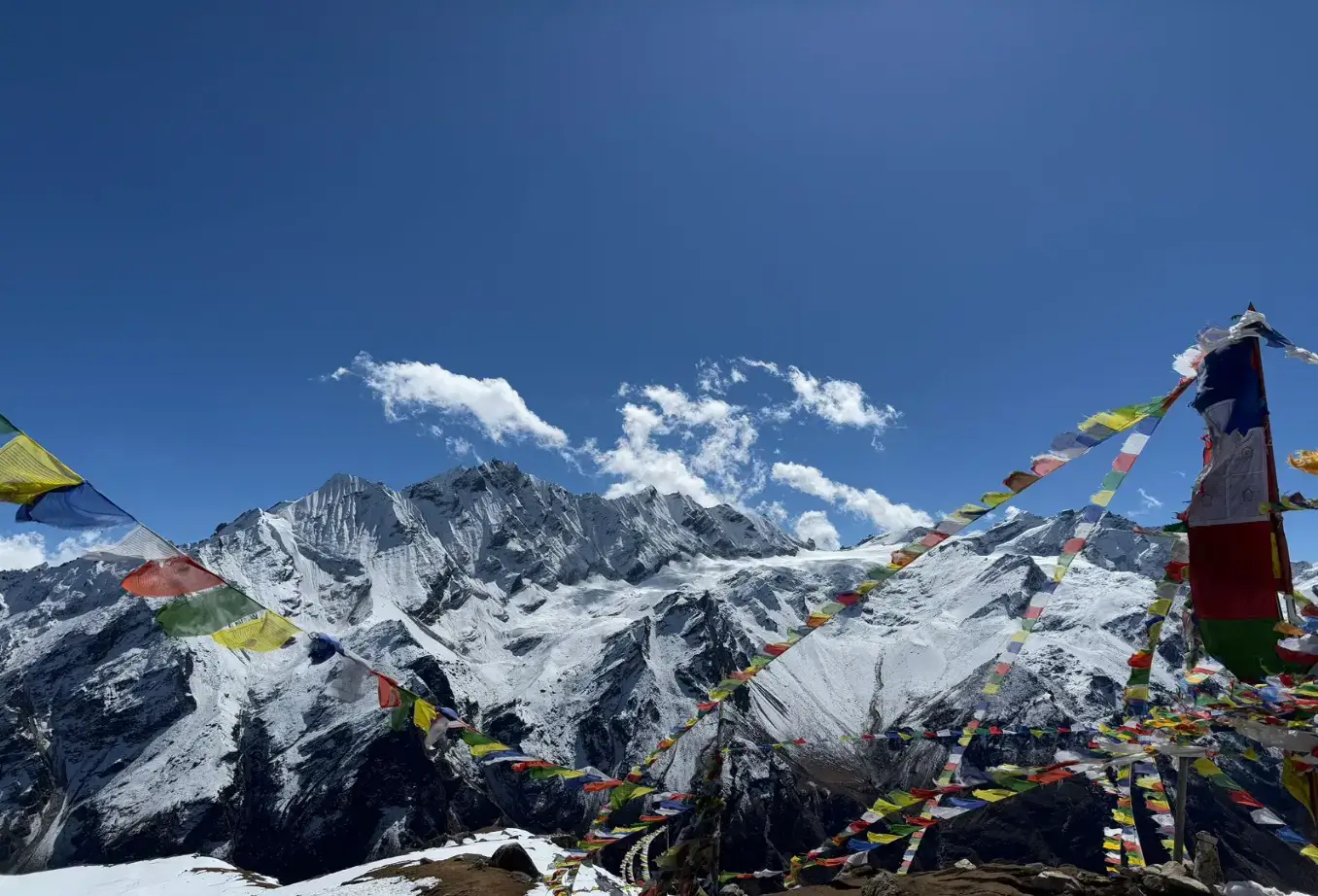
High above sea level, at 5,364 meters, Everest Base Camp rests within a wide, bowl-shaped basin carved by glaciers, tucked under the Khumbu Icefall, where stone, frost, and rarefied air meet. Though figures are quoted exactly, the true impact reveals itself gradually, felt more in the body’s adjustments than on any altimeter – a place better understood as passage than arrival, where change unfolds with hesitation.
People reach it only after long walks through Sagarmatha National Park, following rivers between stands of blue pine and rhododendron that give way to sparse mountain shrubs. Arrival in Namche Bazaar, sitting at 3,440 meters, marks the point when adaptation ceases to be planned – it becomes unavoidable; breathing turns conscious, movement cautious.
Time, Fatigue, and Acclimatization
Twelve days typically frame the Everest base camp trek journey there and back from Lukla, yet the actual span hinges on the pace set by guides and personal stamina. Not path turns or bed quality shape the experience most, but rather the warping sense of hours. Walking for two hours seems great. Choices grow heavy: rest now, go down, keep moving – each shaped by unseen drops in blood oxygen.
Mild headaches, trouble sleeping, and less desire to eat – each reflects normal bodily adjustments rather than malfunction. Adaptation does not occur at once; instead, it emerges slowly via repeated periods of rest paired with exposure to higher altitudes, prompting steady increases in red blood cells over time.
Teahouses, Waste, and Seasonal Dependence
Scattered along the path, teahouses provide simple refuge warmed by stoves that burn wood. Not designed for beauty, these buildings exist mainly to support movement through the area. Run often by Sherpa households, they depend on travelers who come and go with the seasons. Even so, income drawn from hikers brings pressure on the nature nearby.
Dealing with human waste continues to be an unresolved issue. Even when rules demand that porters remove trash from places such as Gorak Shep, adherence shifts unpredictably. Certain garbage remains behind, breaking down only slightly because frozen ground restricts natural decomposition. Despite official mandates, remnants linger where cold soil hampers decay.
Ancient Trade Routes and Changing Rivers
Following ancient connections between Tibet and Nepal, the path traces long-standing crossings. Routes now taken by walkers were first shaped by those moving salt and wool. Though marked only by worn rock, the rhythm of passage remains unchanged. Without notice, such repetition strengthens how places hold together across time. Over glacial rivers, suspension bridges move gently, crossing waters born of thawing ice – proof that the terrain does not stay fixed.
Each season now sees water climb sooner than before, a shift noted by nearby residents who tie it to wider transformations within the frozen zones of the Hindu Kush Himalaya.
Navigation, Wind, and Terrain Awareness
Simple skills suffice for movement through the area. Though signs appear here and there, seasoned travelers depend on observing landforms rather than digital tools. Conditions shift unpredictably – early-season snow may hide paths close to Dingboche, just as autumn’s clear air brings faraway summits into focus. Open stretches past Pheriche bring stronger gusts, given that trees no longer break the airflow.
When reaching places such as Kala Patthar at 5,545 meters, fitness outweighs equipment choices. Endurance built through steady aerobic training serves better under long efforts, particularly on early-morning ascents where wind remains low and skies open before sunrise.
The Temporary Nature of Base Camp
Surprisingly, the base camp shifts roles depending on the time of year. In spring, usually April through May, it functions as a launch point for peak attempts, equipped with communication gear, health shelters, and storage caches. At other times, occupancy drops close to zero. The facilities? Not permanent – one by one, tents get packed away each year, cooking areas taken apart.
Within national parks, building lasting structures remains limited, following rules shaped long ago to protect the natural balance. Not many who visit understand how temporary activities really are; images show crowds at a point in time, never fixed states. Though often assumed stable, the presence of people shifts constantly, caught briefly by cameras rather than built into the land.
Health Monitoring and Emergency Response
Most health checks happen without structure. Observations of how a person walks, speaks, or looks in the face offer first hints of mountain sickness. Devices that measure blood oxygen show up now and then; yet their results shift greatly due to water intake, activity level, or low temperatures. Moving someone who is ill depends on helicopters waiting in either Kathmandu or Pokhara – flights take place solely if skies allow. Avoiding problems takes priority over responding afterward.
Rest periods for adjusting to height appear at intervals of several hundred meters upward, close to global guidelines on climbing slowly.
Sensory Memory Beyond the Photographs
Pictures fill most memories, still other senses stay behind – scent of burning juniper inside old stone temples, a sharpness on the tongue brought by thin highland air, gusts tearing across open cliffs. Grand views oppose bodily strain. At dawn, when skies run clear, Everest seems near enough to touch from Kala Patthar; reaching it means crossing vast terrain through harsh labor.
The summit hangs above, indifferent to how films often portray desire. There it stands – a mass formed slowly beneath shifting continents long ago.
Rituals, Stone Paths, and Enduring Presence
Slowly, meaning grows from surroundings. Along parts of the trail rise stone stacks etched with “Om mani padme hum,” weathered by years passing. Time shows itself in worn surfaces; people have walked here long before cameras or guidebooks appeared.
Each morning, voices emerge from Tengboche Monastery, following patterns steady through changing eras. While footsteps now belong more to travelers than traders, rituals continue without forceful reply. New habits arrive with visitors, still, old ways shape space without conflict.
Descent, Reflection, and Inner Change
Downward, bodies adapt without symmetry. Below four thousand meters, breath grows steady; still, weariness persists in some. Completion arrives not as victory yet as a shift – descent into thinner air alongside deeper knowing. Lessons come slantwise, shown by quiet signs ignored until necessity forces attention. Movement forward exists more in measured inner shifts than fixed points on a map.
 Kaif
Kaif
 Hamza
Hamza