
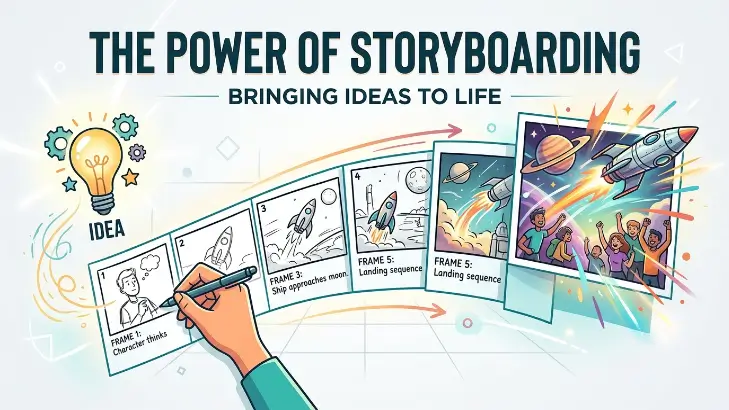
Storyboarding is an essential tool that helps creators turn abstract ideas into concrete visual narratives. Acting as a bridge between imagination and execution, it helps align creative visions across various industries. Whether you are working in film, animation, or even software development, a storyboard brings structure and clarity to your project.
Leveraging tools like FLORA’s storyboard AI can further streamline the transition from concept to realization, providing an efficient, intuitive pathway for creators at all skill levels. By using storyboards, teams can communicate more effectively, visualize complex ideas, and prevent costly mistakes during production.
In today’s fast-paced creative environments, storyboarding has solidified its place as an industry standard due to its versatility and practicality. This guide will take you through what storyboarding is, its importance in creative projects, practical steps for creating a board, the tools available, and real-world applications.
What Is Storyboarding?
Storyboarding is the process of creating a sequential series of illustrations or images that represent the key scenes or actions within a project. Each panel in a storyboard captures pivotal moments, camera angles, and flow of action, allowing creators to visualize the end product before actual production begins.
This practice is widely used in film production, animation, and advertising, and is increasingly influential in fields such as user experience design and software development. By laying out scenes visually, everyone involved can anticipate challenges and collaborate on forming a cohesive narrative arc.
Importance in Creative Projects
Integrating storyboarding into creative workflows brings a multitude of advantages that can significantly impact the quality and efficiency of a project:
- Clarity:Storyboards provide a visual road map, ensuring all team members share the same understanding of the vision.
- Efficiency:By visualizing scenes in advance, teams can spot and address potential issues early, thereby reducing costly do-overs during later phases.
- Communication:Serving as a universal language, a storyboard bridges communication gaps between people with different specialties, streamlining feedback and approvals throughout the production life cycle.
This clarity not only improves the flow of creative collaboration but also saves time and resources, making storyboarding invaluable even beyond the media industry.
Steps to Create an Effective Storyboard
- Understand the Script:Review the narrative or script thoroughly so you can faithfully translate scenes into visual form.
- Break Down the Story:Divide the project into manageable scenes or important shots to ensure that each key moment is accounted for.
- Sketch the Scenes:Use simple sketches to represent the composition, action, and main elements within each frame.
- Add Details:Provide annotations about camera movements, dialogue, transitions, and any crucial visual information to bring depth to the storyboard.
- Review and Revise:Collaborate with your team, scrutinize each sequence, and revise the board as necessary to achieve a polished visual script.
Tools and Techniques
Various methods and digital solutions can be used when developing a storyboard:
- Traditional Methods:Pen and paper remain a popular choice for their flexibility and immediacy, especially in the early brainstorming phase.
- Digital Software:Programs such as Adobe Photoshop and Illustrator provide artists with layers, templates, and easy editing, making them ideal for more advanced or polished storyboards.
- AI Integration:Artificial intelligence is now streamlining the process. Innovative tools and platforms make it easier for those with limited artistic skills to create professional-grade boards.
- For example, director Martin Scorsese is working with generative AI to enhance his storyboarding process and communicate visual concepts more effectively to his teams. Learn more about Martin Scorsese’s use of AI in storyboarding.
Real-World Examples
Storyboarding has played a crucial role in shaping some of the most renowned film scenes. Alfred Hitchcock, for example, meticulously storyboarded his films to envision every detail, famously planning out suspense sequences shot by shot. Storyboarding techniques are also common in industries such as gaming, where visualizing user experience before programming minimizes rework and errors. A
Common Challenges and Solutions
While the benefits are clear, storyboarding can also present some hurdles for creative teams:
- Time-Consuming:Creating thorough storyboards demands significant effort and planning. Solution: AI-powered tools and digital templates expedite this process, allowing teams to focus on refining ideas rather than starting from scratch each time.
- Skill Requirements:Not everyone on the team may possess advanced drawing skills or design knowledge. Solution: Adopt simple sketching techniques or leverage user-friendly digital platforms that require minimal artistic expertise.
- Flexibility:Project changes can render previous storyboards outdated. Solution: Maintain a living storyboard that is continually updated and refined, enabling ongoing adaptation as the project evolves.
Conclusion
Storyboarding provides more than just a visual plan; it is a vital practice that brings creative ideas to life efficiently and collaboratively. By combining traditional skills with modern tools like AI-powered platforms, creators of all backgrounds can harness the power of storyboarding for any project.
This not only boosts the quality of the final product but also empowers teams to collaborate smoothly, embrace new technology, and tell more compelling stories. Whether used in film, advertising, education, gaming, or business presentations, storyboards help organize complex concepts into clear and engaging visual sequences.
They allow creators to identify potential issues early, improve decision-making, and maintain consistency throughout the production process. As creative industries continue to evolve, storyboarding remains an essential method for transforming imagination into structured, impactful, and memorable experiences.
 IQnewswire