
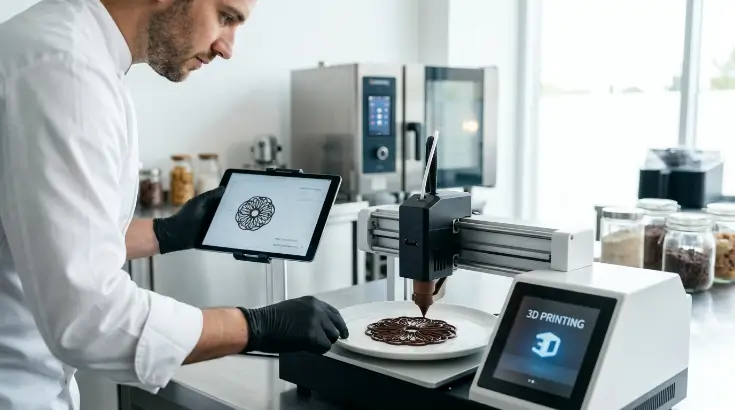
Technology is transforming almost every part of the food industry, and professional baking and pastry are no exception. From innovative ingredients and automated production systems to artificial intelligence and sustainable practices, new technologies are helping bakers and pastry professionals improve quality, consistency, and efficiency.
While traditional skills remain essential, modern technology provides professionals with new tools to experiment, optimize their processes, and respond to changing consumer expectations.
The Growing Importance of Innovative Ingredients
Ingredients play a central role in the quality of baked goods and pastry products. Today, consumers are increasingly interested in products that offer better taste, texture, nutritional value, and sustainability.
This has encouraged food manufacturers and professional suppliers to develop innovative solutions for bakers, pastry chefs, and chocolatiers. Companies such as Puratos are working in areas including professional baking, pastry, chocolate, and food innovation.
Innovative ingredients can help professionals achieve more consistent results while also giving them greater flexibility when developing new recipes and products.
Technology Is Improving Precision in Baking
Baking is often described as both an art and a science. Small changes in temperature, humidity, fermentation time, or ingredient proportions can have a significant impact on the final product.
Modern equipment and digital monitoring systems make it easier to control these variables. Sensors can monitor temperature and humidity, while automated systems can help maintain consistent production conditions.
For professional bakeries, this precision can reduce inconsistencies and make it easier to reproduce successful recipes on a larger scale.
Artificial Intelligence and the Future of Food Production
Artificial intelligence is also beginning to influence the food industry. AI-powered systems can analyze large amounts of information and identify patterns that may be difficult to recognize manually.
In baking and pastry production, data analysis could help businesses forecast demand, manage inventory, optimize production schedules, and reduce food waste.
AI can also provide insights into consumer preferences. By analyzing purchasing trends and customer feedback, businesses can better understand which flavors, products, and formats are becoming popular.
Although AI cannot replace the creativity and experience of a skilled baker or pastry chef, it can become a useful tool for making better business and production decisions.
Sustainability in Modern Baking
Sustainability has become another important area of innovation. Bakeries and food manufacturers are looking for ways to reduce waste, use resources more efficiently, and improve the environmental impact of their operations.
Better production planning can help reduce unnecessary ingredient waste. Energy-efficient equipment can lower energy consumption, while improved packaging and responsible sourcing can contribute to more sustainable food production.
Ingredient suppliers also have an important role to play by developing solutions that support both product quality and environmental responsibility.
Technology Does Not Replace Traditional Skills
Despite the growing use of technology, traditional baking skills remain extremely valuable. Understanding dough, fermentation, chocolate, ingredients, and flavor combinations still requires experience and creativity.
The best results often come from combining traditional knowledge with modern tools.
For example, a pastry chef can use digital equipment to achieve greater precision while still relying on personal experience to develop the flavor and presentation of a dessert. Similarly, a baker can use automated monitoring systems while continuing to make important decisions based on the characteristics of the dough.
The Future of Baking and Pastry
The future of professional baking and pastry will likely be shaped by the combination of technology, creativity, and sustainability.
Innovative ingredients, digital production systems, artificial intelligence, and better resource management are creating new opportunities for professionals across the industry.
However, technology works best when it supports human expertise rather than replacing it. The knowledge and creativity of bakers, pastry chefs, and chocolatiers will continue to be essential.
As the industry evolves, businesses that successfully combine traditional craftsmanship with modern innovation will be better positioned to meet the expectations of today’s consumers.
Technology is therefore not changing the identity of baking and pastry—it is giving professionals new ways to improve their craft and build the future of the food industry.
 Rizwan Aslam