
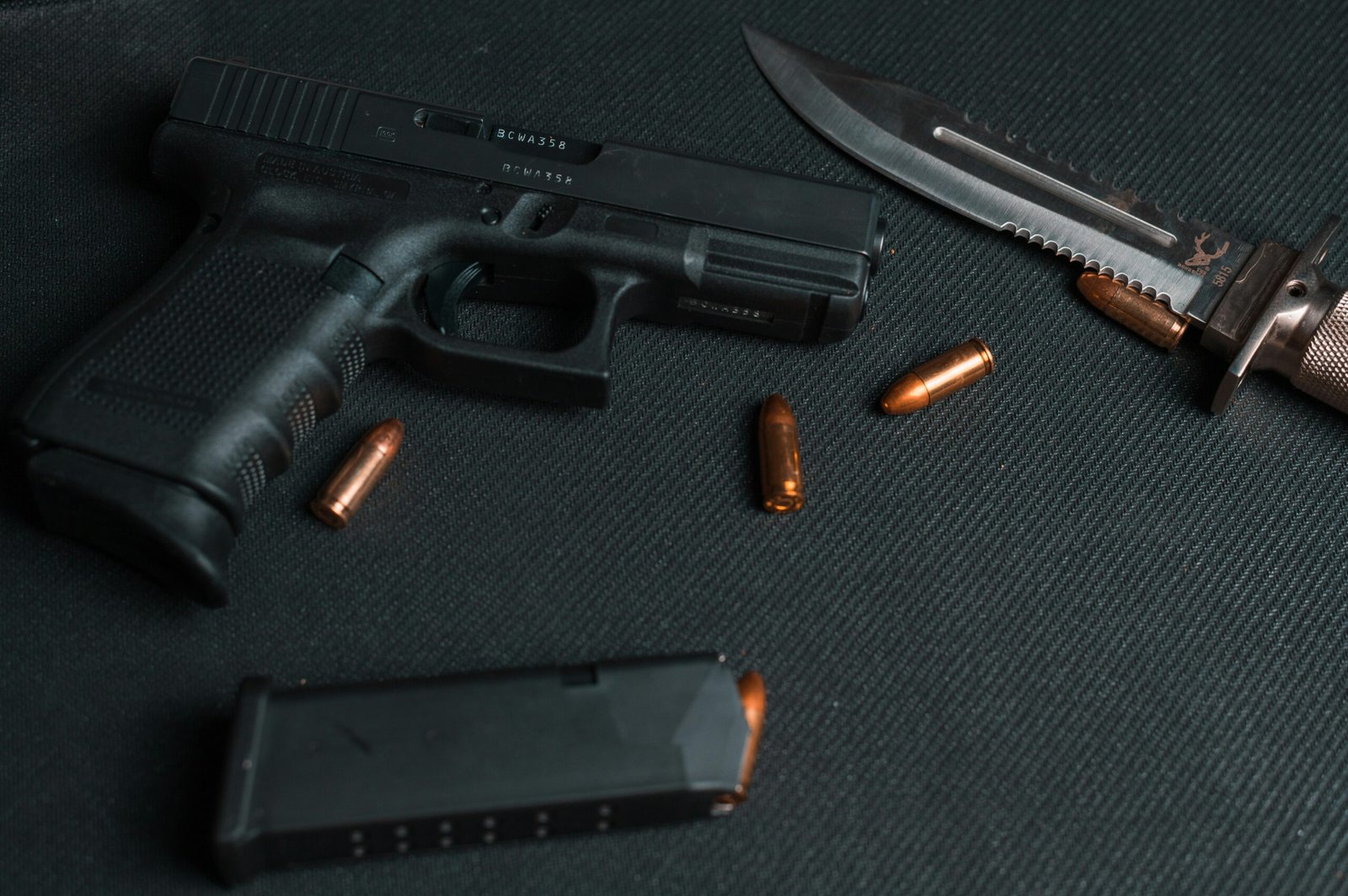
A deadly weapon charge does not always involve a gun or knife. In many jurisdictions, an ordinary object can qualify as a deadly weapon when it is used or intended to be used in a way capable of causing death or serious bodily injury. That means an object that seems harmless by itself can become important evidence in an assault case.
A defense attorney for assault with a deadly weapon can help examine whether an object actually meets the applicable legal definition and whether the facts support the charge.
What Counts as a Deadly Weapon
Deadly weapon laws vary by jurisdiction, but many distinguish between traditional weapons and ordinary objects that become dangerous because of how they are used.
Depending on the circumstances, examples can include:
- A vehicle driven toward a person
- A baseball bat or metal pipe used to strike someone
- A broken bottle or piece of glass
- A heavy object thrown toward someone’s head
- A cord or similar object used to restrict breathing
The Legal Information Institute explains that the legal meaning of a deadly weapon can depend on the type of object and the circumstances in which it is used.
The object itself is not necessarily the deciding factor. The circumstances surrounding its use matter. A rock on the ground is ordinarily just a rock. If prosecutors allege that someone intentionally threw it toward another person’s head, however, its manner of use can become central to the deadly weapon allegation.
This distinction matters when an object was never designed as a weapon. Prosecutors may focus on its size, weight, force, location of impact, or the manner in which it was allegedly used. Defense counsel can therefore examine whether the evidence actually supports the characterization rather than simply accepting the label in an arrest report.
Why the Deadly Weapon Allegation Matters
The consequences of a deadly weapon allegation depend heavily on the jurisdiction and the specific offense charged. In some places, using or exhibiting a deadly weapon can elevate an assault from a misdemeanor to a felony. Other jurisdictions may apply different classifications or sentencing rules.
The potential consequences can extend beyond incarceration or fines. A felony conviction may affect employment opportunities, professional licensing, housing applications, firearm rights, and other areas of life. The long-term impact makes it important to understand the specific charge and potential outcomes before making major decisions about the case.
The precise penalties also depend on factors such as the alleged victim’s injuries, the type of object involved, prior convictions, the defendant’s conduct, and whether other charges or enhancements apply. Because these rules differ between jurisdictions, anyone facing the allegation should review the applicable law rather than relying on general sentencing information found online.
Where the Defense Can Challenge the Charge
A deadly weapon allegation does not automatically establish guilt. The prosecution still has to prove the elements of the charged offense beyond a reasonable doubt.
One potential defense issue is whether the object was actually used or exhibited in a manner that satisfies the applicable definition of a deadly weapon. The defense can examine witness statements, photographs, medical records, video footage, physical evidence, and the alleged victim’s account to determine whether the prosecution’s description matches the available evidence.
Self-defense can also become important when the evidence supports the claim that the defendant reasonably used force to protect against another person’s unlawful force. The facts surrounding who initiated the confrontation, what threats were made, and how the force was used can all become significant. The legal standards for self-defense vary, so the applicable local law must be considered.
Evidence-gathering procedures may provide another avenue for challenging the prosecution’s case. If police obtained evidence through an unlawful search or obtained statements in violation of applicable legal protections, defense counsel can evaluate whether a suppression motion or another challenge is appropriate.
The defense may also examine inconsistencies between witness accounts and physical evidence. Differences in descriptions of distance, movement, timing, injuries, or the object’s use can become important when prosecutors must establish what actually happened.
What Happens After a Deadly Weapon Arrest
The procedure following an arrest varies by jurisdiction, but a serious assault case can involve an initial appearance, bond proceedings, investigation, formal charging, pretrial litigation, plea negotiations, and trial.
The period immediately following an arrest can be particularly important because evidence and witness accounts may change as the case develops. Defense counsel can review the arrest report, available recordings, photographs, messages, medical documentation, and other evidence before deciding how to approach the allegations.
Pretrial motions can also shape the case. Depending on the circumstances and applicable law, counsel may challenge the admissibility of physical evidence, statements, identification evidence, or other material the prosecution intends to use.
The goal is not simply to react to the charge. It is to examine whether the evidence actually supports every element the prosecution must prove.
What to Gather After an Arrest
Someone facing a deadly weapon allegation should preserve relevant evidence as soon as possible. This can include text messages, photographs, surveillance footage, medical records, witness contact information, and documents received during the arrest or bond process.
Avoid deleting messages, altering photographs, contacting witnesses about their testimony, or discussing the case publicly. Those actions can create additional problems.
Instead, provide the available information to defense counsel and allow the attorney to determine what is relevant and how it can be used. Keeping original files and preserving their surrounding context can also help counsel understand the timeline and evaluate competing accounts.
Take the Charge Seriously From the Beginning
A deadly weapon allegation can turn an incident involving an ordinary object into a serious criminal case. The object’s appearance is only part of the issue. How it was allegedly used, what the evidence shows, the injuries involved, and the surrounding circumstances can all affect the outcome.
Because these charges can carry significant penalties, early legal review matters. A careful defense strategy starts with testing the prosecution’s version of events against the actual evidence rather than assuming the allegation tells the whole story. Early preparation can also help preserve evidence, identify weaknesses, and ensure that important legal issues are considered before a defendant makes decisions that could affect the rest of the case.
 Rizwan Aslam
 Pk Seo Agency