
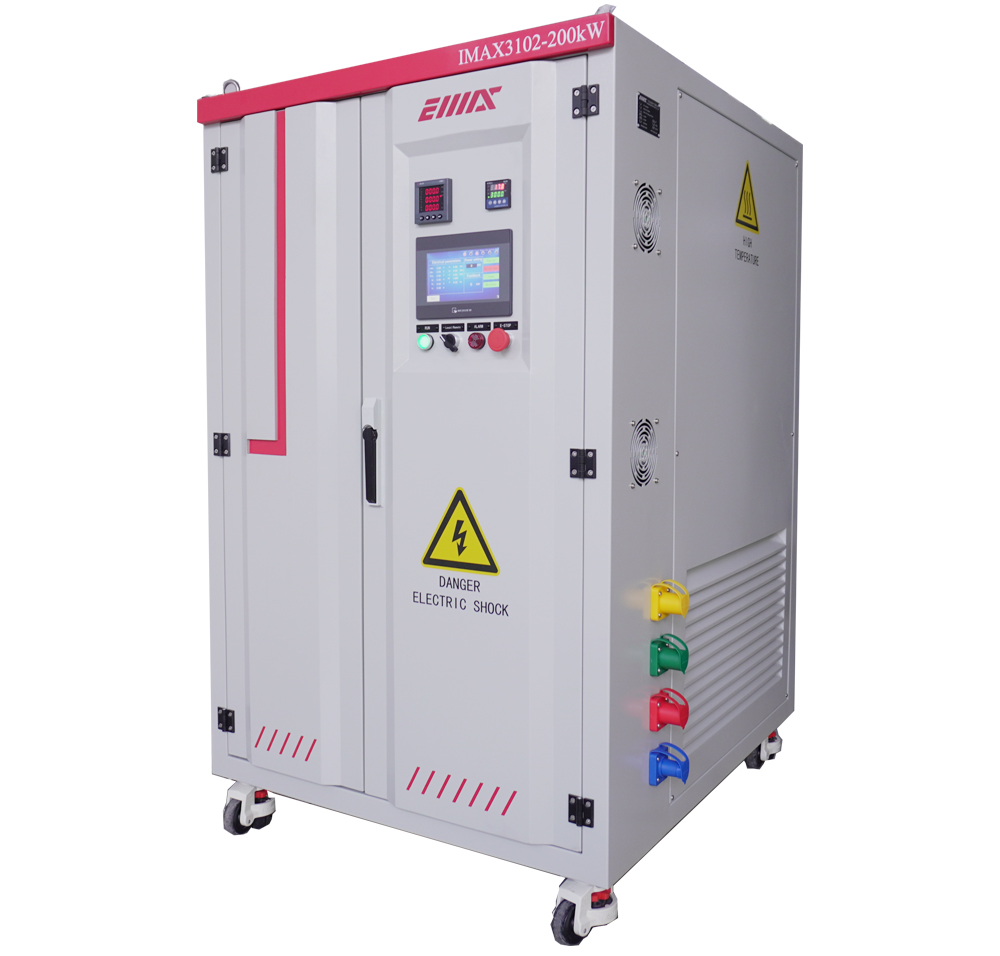
Many power industry practitioners often struggle to distinguish between AC and DC load banks, as both serve the core purpose of power system testing. Despite their similar fundamental functions, these two types of load testing devices differ significantly in working principles, structural designs, testable power sources and industry application scenarios.
This guide systematically elaborates on the unique attributes, functional characteristics and practical use cases of AC and DC load banks. Whether you are a beginner learning power system maintenance or a professional engineer responsible for equipment commissioning and fault detection, this article will help you accurately select load bank equipment to match different testing scenarios.
Overview of Load Banks
A load bank is a professional electrical testing device that simulates real-world electrical load conditions for various power generation and power supply equipment. It replaces actual end-user electrical equipment to apply controllable, stable and repeatable artificial loads to power sources such as generators, batteries, UPS and inverters.
By conducting standardized load tests, technicians can verify the output stability, load capacity, operating efficiency and safety performance of power equipment, detect potential hidden faults in advance, and avoid unexpected shutdown losses caused by power system failures. According to the type of applicable current, load banks are mainly divided into two categories: AC load banks and DC load banks.
What Are AC Load Banks? Core Features and Advantages
AC load banks are specially developed for alternating current power systems, adapting to the sinusoidal alternating current characteristics of industrial and commercial power grids and AC power generation equipment. They can simulate diverse complex operating loads in actual AC power environments and are widely used in mainstream power system testing scenarios.
In terms of load simulation types, AC load banks support three core load modes to meet full-scenario testing requirements. Resistive loads simulate conventional power-consuming equipment such as electric heating devices and lighting systems; inductive loads replicate the operating characteristics of inductive equipment including motors, transformers and compressors; capacitive loads are used to simulate power factor correction devices and capacitive terminal loads, helping test the power factor adjustment capability of AC systems.
A prominent advantage of AC load banks is their compatibility with single-phase and three-phase AC power systems, which are the most widely used power supply forms in industrial production, data centers and commercial buildings. In addition, high-performance AC load banks support variable frequency testing, enabling adaptive detection of new energy power equipment with non-standard frequency output such as grid-connected inverters and wind power generation units.
In daily engineering work, AC load banks are mainly used for new equipment commissioning, regular system maintenance and load capacity verification. They can accurately detect problems such as insufficient generator output, unbalanced three-phase voltage and poor power quality, ensuring the long-term stable operation of AC power supply systems.
What Are DC Load Banks? Core Features and Advantages
DC load banks are professional testing devices tailored for direct current power systems, designed for constant-voltage and constant-current DC power output characteristics. Different from AC equipment, DC load banks focus on high-precision testing of DC power sources, with simpler load matching logic and more accurate data monitoring.
Although DC load banks also support resistive, inductive and capacitive load simulation modes, their application orientations are more targeted. Resistive loads are the most commonly used mode, applied to constant-power discharge testing of batteries and DC power supplies; inductive loads simulate DC motor operating conditions; capacitive loads are mainly used for performance detection of DC frequency conversion equipment and power factor correction modules.
The biggest strengths of DC load banks lie in high testing accuracy and stable constant-load output. They can achieve precise adjustment of micro-loads, accurately capture subtle changes in DC power output voltage, current and discharge duration, and effectively evaluate the health status, capacity attenuation and stability of DC power equipment. This high-precision testing capability makes them irreplaceable in high-standard industrial and military scenarios.
Moreover, modern DC load banks feature energy-saving and efficient testing modes. They can complete standardized load tests with low energy loss, reducing operating costs for enterprises while ensuring test data authenticity and repeatability.
Practical Applications of AC Load Banks
AC load banks cover most AC power equipment testing scenarios in civil and industrial fields, serving as core testing tools for power system operation and maintenance.
First of all, they are widely used for backup power system verification. Data centers, industrial parks and medical institutions are equipped with large-scale backup generators and UPS AC power systems. Regular AC load bank testing can simulate full-load and peak-load operating conditions to confirm that backup equipment can switch normally and output stably during grid power outages.
Secondly, AC load banks are essential for new power equipment commissioning. Before newly installed generators, turbines and AC power distribution systems are put into formal operation, full-load and variable-load simulation tests must be carried out with AC load banks to eliminate installation defects and performance flaws.
In addition, they are used for power system capacity assessment and regular maintenance. By applying rated load and overload tests, technicians can verify the ultimate load capacity of AC power equipment, judge equipment aging degree, and formulate targeted maintenance plans to extend equipment service life.
Practical Applications of DC Load Banks
DC load banks are concentrated in professional scenarios dominated by DC power supply, with prominent application value in new energy, communication, aerospace and defense industries.
Battery performance testing is the most mainstream application of DC load banks. Communication base station backup batteries, energy storage battery packs and industrial standby batteries need regular discharge tests and capacity calibration. DC load banks can simulate actual discharge loads to detect battery capacity attenuation, internal resistance abnormality and voltage imbalance, ensuring the reliability of backup battery systems.
In the new energy industry, DC load banks are used for photovoltaic module and solar power system testing. They simulate real terminal load demands to detect the output power, conversion efficiency and operational stability of solar panels under different light intensity and load conditions.
Meanwhile, DC load banks are also applicable to the performance detection of DC power supply equipment such as rectifiers, DC stabilized power supplies and inverter DC terminals. They can accurately evaluate key indicators including voltage regulation accuracy, operating efficiency and thermal stability of the equipment, providing data support for equipment optimization and fault troubleshooting.
Conclusion
To sum up, AC and DC dummy load banks have their own applicable scenarios and functional advantages, and there is no absolute superiority between them—only the most matching equipment for specific testing needs. AC load banks focus on large-scale AC power system testing in industry and commerce, supporting multi-phase and variable-frequency complex load simulation; DC load banks are dedicated to high-precision detection of DC power equipment, covering batteries, new energy components and professional DC power supplies.
Choosing a reasonable load bank is the key to obtaining accurate test data and ensuring the safe and stable operation of power systems. Familiarity with the core differences and application boundaries between AC and DC load banks can help engineering practitioners avoid equipment selection errors, improve the efficiency of power system commissioning, maintenance and fault detection, and guarantee the reliable operation of various power equipment in the long run.
 Kaif
Kaif