
Understanding your body is one of the most important steps in managing your health. For many women, tracking the menstrual cycle and knowing the best time for pregnancy can feel confusing. This is where an ovulation calculator becomes very helpful.
An ovulation calculator is a simple tool that helps you predict your fertile days—the time when you are most likely to get pregnant. Whether you are trying to conceive or just want to understand your cycle better, this guide will explain everything in clear and easy words.
What Is an Ovulation Calculator?
An ovulation calculator is a tool that estimates when you are likely to ovulate. Ovulation is the time in your cycle when your ovary releases an egg. This is the most fertile period of your cycle.
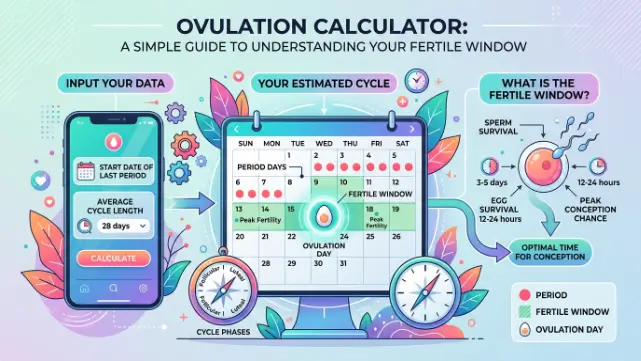
The calculator usually asks for:
- The first day of your last period
- The average length of your menstrual cycle
Based on this information, it predicts:
- Your ovulation day
- Your fertile window (the best days for pregnancy)
Why Ovulation Matters
Ovulation is a key part of the reproductive cycle. Without ovulation, pregnancy cannot happen.
Here’s why it is important:
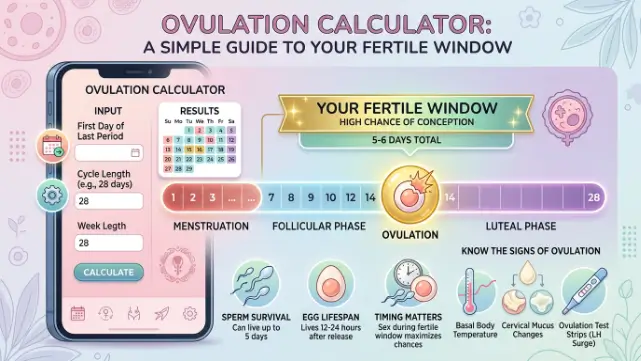
- The egg is only available for about 12 to 24 hours after ovulation
- Sperm can live inside the body for up to 5 days
- This means your fertile window lasts around 5 to 6 days
Understanding this timing helps increase the chances of pregnancy.
How an Ovulation Calculator Works
The ovulation calculator uses a simple method based on cycle tracking.
Basic Formula
Ovulation usually happens about:
14 days before your next period
For example:
- If your cycle is 28 days → ovulation around day 14
- If your cycle is 30 days → ovulation around day 16
The calculator counts backward from your expected next period to find your ovulation day.
What Is the Fertile Window?
The fertile window is the time when pregnancy is most likely.
It Includes:
- 5 days before ovulation
- The day of ovulation
Example:
If ovulation is on day 14:
- Fertile window: Day 9 to Day 14
These are the best days to try for pregnancy.
Benefits of Using an Ovulation Calculator
Using an ovulation calculator offers many advantages:
1. Easy to Use
You don’t need medical knowledge. Just enter basic details and get results.
2. Helps Plan Pregnancy
It increases the chances of conception by identifying the best days.
3. Better Cycle Awareness
You understand your body and patterns more clearly.
4. Saves Time
No need for complex tracking methods in the beginning.
Who Should Use an Ovulation Calculator?
An ovulation calculator is useful for:
- Women trying to conceive
- Couples planning pregnancy
- Women tracking menstrual health
- Those wanting natural cycle awareness
It is especially helpful for beginners.
Step-by-Step Guide to Using an Ovulation Calculator
Here’s how to use it correctly:
Step 1: Know Your Cycle Length
Count from the first day of your period to the day before your next period.
Step 2: Enter Your Last Period Date
This is the first day of your last menstrual cycle.
Step 3: Input Cycle Length
Most cycles range between 21 to 35 days.
Step 4: Get Results
The calculator will show:
- Estimated ovulation date
- Fertile days
Signs of Ovulation
While an ovulation calculator gives an estimate, your body also shows natural signs.
Common Signs Include:
- Cervical mucus changes (clear and stretchy)
- Slight increase in body temperature
- Mild lower abdominal pain
- Increased desire or energy levels
Tracking these signs can improve accuracy.
Accuracy of Ovulation Calculators
Ovulation calculators are helpful, but they are not 100% accurate.
Why?
Because cycles can change due to:
- Stress
- Illness
- Hormonal changes
- Lifestyle factors
Studies suggest that only about 30% of women ovulate exactly on day 14, even with a regular cycle.
So, it is best to use the calculator as a guide, not a guarantee.
Ovulation Calculator vs Other Tracking Methods
There are several ways to track ovulation.
Ovulation Calculator
- Simple and quick
- Based on dates
- Good for beginners
Ovulation Test Kits
- Detect hormone levels
- More accurate
- Cost money
Basal Body Temperature Tracking
- Tracks temperature changes
- Requires daily monitoring
Calendar Method
- Manual tracking
- Less accurate than calculators
Using a combination of methods gives better results.
Common Mistakes When Using an Ovulation Calculator
Many people make small mistakes that affect results.
Avoid These:
- Not tracking cycle length correctly
- Assuming cycles are always regular
- Ignoring body signs
- Relying only on the calculator
Accuracy improves when you combine multiple methods.
Tips to Increase Chances of Pregnancy
If you are using an ovulation calculator to conceive, these tips can help:
1. Time Intercourse Properly
Have intercourse during the fertile window, especially:
- 2–3 days before ovulation
- On ovulation day
2. Maintain a Healthy Lifestyle
- Eat balanced meals
- Stay active
- Get enough sleep
3. Reduce Stress
Stress can affect ovulation and hormones.
4. Stay Consistent
Track your cycle for several months to notice patterns.
Irregular Cycles and Ovulation Calculators
If your cycle is irregular, predictions become harder.
In Such Cases:
- Use ovulation test kits
- Track physical signs
- Consult a healthcare professional
Ovulation calculators work best with regular cycles.
When to See a Doctor
You should consider medical advice if:
- You have been trying for 12 months without success
- Your cycles are very irregular
- You miss periods frequently
- You have known health issues
Early guidance can improve outcomes.
Myths About Ovulation
There are many myths related to ovulation.
Myth 1: Ovulation Always Happens on Day 14
Reality: It varies from person to person.
Myth 2: You Can Get Pregnant Any Day
Reality: Pregnancy is most likely during the fertile window.
Myth 3: Ovulation Calculators Are Always Accurate
Reality: They are estimates, not exact predictions.
Understanding the facts helps avoid confusion.
Modern Technology and Ovulation Tracking
Today, many tools are available to make tracking easier.
Digital Tools Include:
- Mobile apps
- Smart trackers
- Online calculators
These tools store data and improve predictions over time.
Emotional Aspect of Fertility Tracking
Trying to conceive can be emotional.
It’s Important to:
- Stay patient
- Avoid stress
- Focus on overall health
Remember, every journey is different.
Advantages of Knowing Your Cycle
Tracking ovulation is not only for pregnancy.
It also helps with:
- Understanding hormonal health
- Predicting periods
- Managing symptoms
This knowledge empowers better health decisions.
Final Thoughts
An ovulation calculator is a simple and helpful tool for understanding your fertile window. It provides a clear starting point for tracking your cycle and planning pregnancy.
While it may not be perfect, it becomes more useful when combined with body awareness and consistent tracking. Learning about your cycle is a powerful step toward better health and confidence.
Whether you are trying to conceive or simply want to understand your body, using an ovulation calculator can make the journey easier and more informed.
 IQnewswire