
For many parents, one of the biggest child passenger safety questions is simple: booster seat vs car seat, what’s the actual difference? While the terms are foften used interchangeably in everyday conversation, they serve very different purposes in a vehicle.
A car seat is designed to restrain a child using its own built-in harness system. A booster seat is designed to position a child so the vehicle’s seat belt fits correctly. That difference matters because the right restraint at the right stage can help support better protection and a better belt fit as your child grows.
If you’re researching the best next step for your child or comparing portable options like BubbleBum, this guide breaks down the facts in a clear, parent-friendly way.
What Is a Car Seat?
When most people say “car seat,” they usually mean a rear-facing seat, a forward-facing seat with a harness, or a convertible/all-in-one seat that includes one or both of those functions.
These seats are built to secure a child with a 5-point harness and are meant for younger children who still need that level of support. In general, a harnessed car seat helps manage crash forces by holding the child in position and limiting movement.
There are several types of car seats, including infant seats, convertible seats, and forward-facing harnessed seats. The correct one depends on your child’s age, height, weight, and developmental stage, along with the manufacturer’s limits for the specific model.
What Is a Booster Seat?
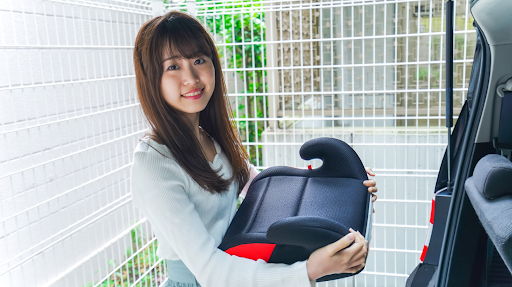
A booster seat does not use its own harness in the same way a traditional harnessed car seat does. Instead, it lifts and positions a child so the vehicle’s lap-and-shoulder belt fits where it should: low across the upper thighs and snug across the shoulder and chest.
That’s the core purpose of a booster seat. It is not meant to replace an earlier-stage restraint too soon. It is meant for children who have already outgrown a forward-facing harnessed car seat and are ready for the next stage of belt-positioning support.
Booster seats come in two main styles: high-back boosters and backless boosters. A backless model can be especially helpful for travel, carpooling, and families who need a compact option for switching between vehicles. Parents looking for a lightweight travel-friendly option often consider the BubbleBum backless portable travel booster seat because of its compact design and portability.
Booster Seat vs Car Seat: The Main Difference
The simplest way to understand booster seat vs car seat is this:
A car seat restrains the child.
A booster seat positions the child.
A harnessed car seat is intended for children who still need a seat’s built-in restraint system. A booster is intended for children who are big enough to use the vehicle seat belt, but not yet big enough for the belt to fit properly on its own.
That means the question is not which one is “better” overall. The better choice is the one that matches your child’s current size and stage.
When Should a Child Move From a Car Seat to a Booster Seat?
This is where many parents feel unsure, and for good reason. The transition should not happen based on age alone. A child should move from a harnessed car seat to a booster only after they outgrow the forward-facing seat’s height or weight limits or no longer fit the harnessed seat according to the manufacturer’s instructions.
In practice, that means a child may be ready for a booster when they have exceeded the maximum settings of their forward-facing harnessed seat. Many children are not ready just because they turn four. The key factors are fit, maturity, and manufacturer limits.
A child also needs to be mature enough to sit properly for the full ride. If they lean out of position, slouch, put the shoulder belt behind their back, or move the lap belt off the hips, the booster cannot do its job correctly.
How Do You Know if a Booster Seat Fits Properly?
Proper belt fit is the whole point of a booster, so this part matters.
A booster seat should help place the lap belt low and snug across the upper thighs, not across the belly. The shoulder belt should lie across the center of the chest and shoulder, not against the neck or face.
Your child should also be able to sit all the way back against the vehicle seat with knees bending naturally at the edge without slouching. If they cannot maintain that posture, the seat belt may not stay in the correct place during travel.
This is why booster readiness is about more than just minimum weight. It’s about whether the seat belt can fit the child the way it is intended to fit.
Is a Booster Seat Safer Than a Car Seat?
This is a common question, but it has a nuanced answer.
A booster seat is not safer than a car seat for a younger child who still fits a harnessed seat. In that case, the harnessed car seat is the appropriate and safer stage because it is designed for that child’s size and needs.
However, once a child has truly outgrown a forward-facing harnessed seat, a properly used booster becomes the correct next step. Safety is about using the right restraint for the child’s current stage, not rushing to the next one.
So if you are comparing booster seat vs car seat, the real goal is not to choose one universally. It is to choose the one that matches your child today.
High-Back Booster vs Backless Booster
Once a child is ready for a booster, parents often compare high-back vs backless models.
A high-back booster may be useful in vehicles without head support behind the child’s head or when parents want additional side structure and belt guidance. A backless booster, on the other hand, can be a great fit when the vehicle already has adequate head support and the child meets the seat’s requirements.
Backless boosters are especially appealing for busy families because they are often easier to carry, easier to move between cars, and easier to pack for travel. That makes them a practical solution for rideshares, rentals, vacations, grandparents’ cars, and school pickups.
Why Parents Search for Portable Booster Seats
Modern family life is not limited to one car and one routine. Parents often need a child restraint that works for road trips, carpools, airport transfers, and quick handoffs between caregivers.
That is why travel-friendly booster seats have become such a popular category. A portable booster can help simplify logistics without changing the core requirement: the child still needs a booster that fits properly, is used correctly, and suits their size.
For families who want a compact option, portability often becomes just as important as storage, weight, and ease of transfer between vehicles.
Common Mistakes Parents Make When Comparing Booster Seats and Car Seats
One of the biggest mistakes is moving a child out of a harnessed car seat too soon. Just because a child meets a minimum age or weight listed on a booster does not always mean they are ready for everyday booster use.
Another common mistake is focusing only on age instead of checking the actual fit of the harnessed seat and the seat belt. Children grow differently, and two kids of the same age may need different restraint stages.
A third mistake is assuming a booster works if the child dislikes the shoulder belt and tucks it behind their back or under their arm. That creates poor belt positioning and reduces the protection the booster is supposed to provide.
The best comparison is not just booster seat vs car seat as product categories. It is whether your child still fits the current seat correctly and whether they can use the next stage properly on every ride.
How to Choose Between a Booster Seat and a Car Seat
If your child still fits within the limits of a forward-facing harnessed car seat, that seat is often still the correct choice. If your child has outgrown it and can sit properly for the whole trip, a booster may be appropriate.
As you choose, consider your child’s current measurements, your vehicle setup, and how the seat will actually be used in daily life. If you switch cars often, travel frequently, or need a lightweight option for occasional rides, portability may become a major decision factor.
The right seat is the one that your child fits, your vehicle supports, and your family will use correctly every time.
Booster Seat vs Car Seat for Travel
Travel is one area where the comparison becomes especially practical. Large harnessed seats can be heavy and awkward to move through airports or transfer between rental cars and taxis. A portable booster may be easier to bring along once a child is developmentally and physically ready for that stage.
That said, travel convenience should never override proper fit and stage readiness. A booster is a smart travel solution only when the child has already outgrown a harnessed forward-facing seat and can sit correctly for the full ride.
For many families, the best travel setup is not about minimizing gear at all costs. It is about balancing safety, fit, convenience, and realistic day-to-day use.
Final Thoughts on Booster Seat vs Car Seat
When parents search booster seat vs car seat, they are usually trying to answer one practical question: What does my child need right now?
The answer depends on whether your child still needs a built-in harness or is ready for a belt-positioning booster. A car seat is for children who still need restraint from the seat itself. A booster seat is for children who have outgrown that stage and need help getting the adult seat belt to fit correctly.
If you remember one thing, let it be this: the safest choice is the seat that matches your child’s current size, stage, and ability to ride properly every time. Always check your seat’s height and weight limits, read the manufacturer’s instructions, and follow local child passenger safety laws.
READ ALSO: Why Professional Roadside Assistance Is More Important Than Ever
 Hamza
Hamza