
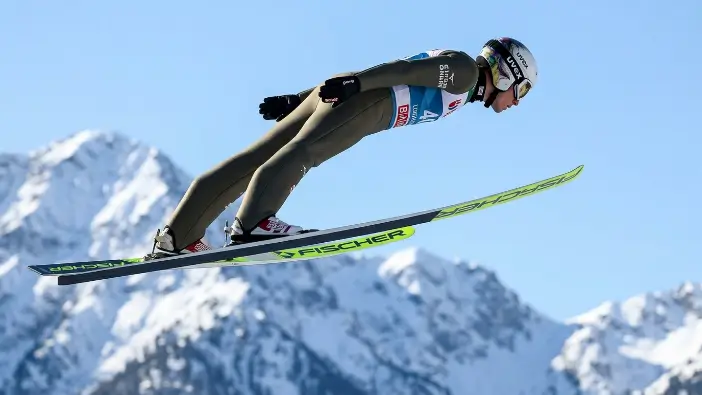
Ski jumping is one of the most fascinating and breathtaking sports in the world. Watching athletes launch themselves off a steep ramp and seemingly float through the air for several seconds often leaves spectators asking the same question: how is it possible for ski jumpers to stay in the air so long and how do they train for that?
At first glance, ski jumpers appear to defy gravity. They travel incredible distances, often exceeding 130 meters (426 feet) in major competitions, while maintaining remarkable control and balance. However, their ability to stay airborne is not magic. It is the result of physics, specialized equipment, precise body positioning, years of training, and exceptional athletic skill.
In this article, we will explore exactly how ski jumpers stay in the air for so long, the science behind their flight, and the rigorous training methods they use to perform at the highest level.
Understanding Ski Jumping
Before answering how is it possible for ski jumpers to stay in the air so long and how do they train for that, it is important to understand what ski jumping actually involves.
Ski jumping is a winter sport where athletes:
- Accelerate down a steep in-run.
- Launch from a takeoff table.
- Fly through the air.
- Land smoothly on a sloped landing area.
The winner is determined by a combination of jump distance and style points.
Professional ski jumpers can reach speeds of:
- 85–100 km/h (53–62 mph) before takeoff
- Distances exceeding 140 meters on large hills
- Over 250 meters on ski flying hills
These numbers highlight just how extraordinary the sport truly is.
The Science Behind Staying in the Air
The answer to how is it possible for ski jumpers to stay in the air so long and how do they train for that begins with physics.
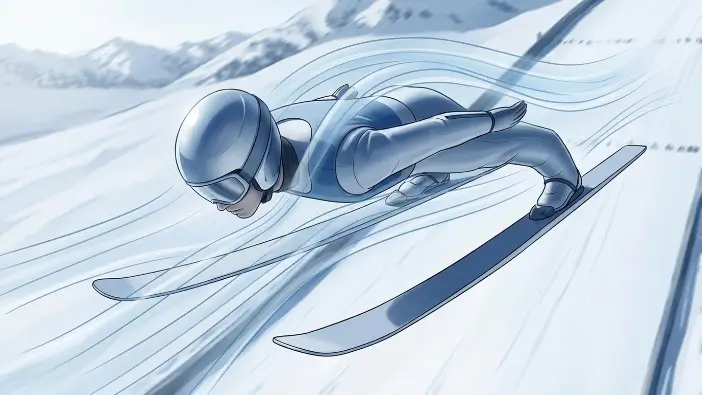
Unlike airplanes, ski jumpers do not have engines. Instead, they rely on aerodynamics to maximize lift and minimize drag.
Three main forces affect every ski jumper:
- Gravity
- Lift
- Drag
Understanding these forces explains how flight becomes possible.
Gravity Pulls Them Down
Gravity constantly pulls the athlete toward the ground.
Without any aerodynamic assistance, a jumper would simply fall after leaving the ramp.
The challenge is finding ways to slow that fall and extend flight time.
Lift Helps Keep Them Airborne
Lift is the force that pushes upward against gravity.
Ski jumpers create lift using:
- Their skis
- Their body position
- Their specialized suits
The larger the lift force, the longer the athlete remains airborne.
Drag Slows Their Movement
Drag is air resistance.
Too much drag reduces distance.
However, a controlled amount of drag can help stabilize the jumper during flight.
Elite athletes learn how to balance lift and drag perfectly.
The Importance of the V-Style Technique
One of the biggest breakthroughs in ski jumping history was the introduction of the V-style.
Before the 1980s, jumpers kept their skis parallel.
Today, athletes spread their skis into a V shape.
This technique dramatically improves aerodynamics.
Benefits include:
- Increased lift
- Better stability
- Longer flight distances
- Improved control
Research has shown that the V-style can increase jump length by more than 10% compared to older techniques.
This innovation transformed the sport and helped athletes stay airborne much longer.
How Body Position Affects Flight
A major part of understanding how is it possible for ski jumpers to stay in the air so long and how do they train for that involves body positioning.
During flight, athletes maintain a highly specific posture.
They:
- Lean forward aggressively
- Keep their body close to the skis
- Extend their arms carefully
- Maintain balance throughout the jump
This position creates an aerodynamic shape that allows air to flow efficiently around the body.
Even small mistakes can reduce flight distance significantly.
Precision Matters
In elite competition:
- A slight head movement can affect balance.
- Poor hip position can reduce lift.
- Uneven ski angles can create instability.
Athletes spend years perfecting these details.
The Role of Ski Equipment
Modern ski jumping equipment plays a huge role in flight performance.
Equipment includes:
- Special skis
- Jumping suits
- Helmets
- Boots
- Bindings
Each piece is carefully designed to improve aerodynamics while meeting strict regulations.
Ski Design
Ski jumping skis are much longer than regular skis.
They can reach:
- Up to 145% of the athlete’s height
Longer skis provide:
- Greater surface area
- Improved lift generation
- Better flight stability
These skis effectively act like wings during flight.
Ski Jumping Suits
The suit is equally important.
Modern suits are designed to:
- Capture airflow efficiently
- Create additional lift
- Reduce turbulence
Strict rules govern suit size because even tiny advantages can significantly affect performance.
The Takeoff: The Most Critical Moment
Many people assume flight is the hardest part.
In reality, takeoff is often considered the most important phase.
A perfect takeoff converts speed into lift.
Athletes must:
- Explode upward at the exact moment
- Maintain balance
- Enter the correct flight position immediately
The entire movement happens within fractions of a second.
Mistiming the takeoff by even a small amount can reduce jump distance dramatically.
How Ski Jumpers Train for Long Flights
Now let’s focus on the second half of the question:
How do they train for that?
Elite ski jumpers train year-round.
Their preparation combines:
- Strength training
- Explosive power development
- Balance exercises
- Aerodynamic practice
- Mental conditioning
Strength Training
Ski jumpers require exceptional lower-body strength.
Important muscle groups include:
- Quadriceps
- Hamstrings
- Glutes
- Calves
- Core muscles
Common exercises include:
Squats
Build powerful legs for takeoff.
Deadlifts
Improve overall strength and stability.
Lunges
Develop balance and single-leg control.
Core Exercises
Strengthen abdominal and back muscles.
A strong core helps maintain proper flight position.
Plyometric Training
Explosive power is essential.
Plyometric exercises teach muscles to produce force rapidly.
Popular drills include:
- Box jumps
- Depth jumps
- Broad jumps
- Single-leg hops
These exercises mimic the explosive nature of takeoff.
Balance Training
Balance is one of the most important skills in ski jumping.
Athletes regularly train using:
- Balance boards
- Stability balls
- Slacklines
- Single-leg exercises
These drills improve body control during flight and landing.
Aerodynamic Practice
Modern ski jumpers spend countless hours refining flight mechanics.
They analyze:
- Body position
- Ski angles
- Arm placement
- Head position
Many teams use:
- High-speed cameras
- Motion analysis software
- Video review systems
This technology allows athletes to identify tiny improvements.
Summer Training
A surprising fact about ski jumping is that athletes train throughout the summer.
Special jumping hills feature synthetic surfaces instead of snow.
These facilities allow year-round practice.
Benefits include:
- More repetitions
- Consistent technique development
- Better preparation for winter competitions
Without summer training, maintaining elite performance would be impossible.
Wind Tunnel Testing
Some national teams use wind tunnels.
Wind tunnel sessions help athletes:
- Study airflow patterns
- Improve body position
- Test equipment setups
This scientific approach has become increasingly important in modern ski jumping.
Mental Training and Focus
Ski jumping is as much mental as physical.
Imagine standing at the top of a massive hill knowing you are about to launch yourself at nearly 100 km/h.
Fear management becomes essential.
Athletes train mentally through:
- Visualization
- Meditation
- Breathing exercises
- Sports psychology sessions
These techniques help maintain confidence under pressure.
The Importance of Landing Training
Landing safely is another major challenge.
Jumpers use a technique called the Telemark landing.
This involves:
- One ski placed slightly ahead
- Bent knees
- Balanced posture
A good landing:
- Improves style scores
- Reduces injury risk
- Maintains control
Athletes practice landings repeatedly to ensure consistency.
Nutrition for Ski Jumpers
Training alone is not enough.
Nutrition plays a major role in performance.
Athletes focus on:
Lean Protein
Supports muscle recovery.
Complex Carbohydrates
Provide training energy.
Healthy Fats
Support overall health.
Hydration
Maintains physical and mental performance.
Proper nutrition helps athletes recover faster and perform consistently.
Common Injuries and Prevention
Because ski jumping involves high speeds and significant forces, injuries can occur.
Common issues include:
- Knee injuries
- Ankle sprains
- Back pain
- Muscle strains
Prevention strategies include:
- Strength training
- Mobility work
- Proper warm-ups
- Recovery sessions
Elite athletes prioritize injury prevention throughout the season.
The Evolution of Ski Jumping Training
Training methods have changed dramatically over the decades.
In the past, athletes relied mostly on repetition.
Today, training includes:
- Sports science
- Biomechanics
- Data analysis
- Advanced recovery methods
This evolution has helped athletes jump farther than ever before.
Fascinating Ski Jumping Facts
Here are some interesting facts about the sport:
- Ski jumpers can exceed 100 km/h before takeoff.
- Ski flying distances can surpass 250 meters.
- Flight times often last between 5 and 8 seconds.
- The V-style revolutionized the sport in the late 1980s.
- Olympic ski jumping remains one of the most watched winter sports.
These achievements highlight the incredible combination of science and athleticism involved.
Why Ski Jumping Looks Like Flying
Many people describe ski jumping as human flight.
While athletes are technically gliding rather than flying, the sensation appears remarkably similar.
Their ability to remain airborne comes from:
- Speed
- Aerodynamics
- Lift generation
- Perfect body positioning
- Years of specialized training
The result is one of the most visually stunning events in sports.
Final Thoughts
When asking how is it possible for ski jumpers to stay in the air so long and how do they train for that, the answer lies in a remarkable combination of physics, technique, equipment, and dedication.
Ski jumpers do not simply leap and hope for the best. Every jump is the product of years of training, scientific understanding, physical preparation, and mental discipline. They use aerodynamic body positions, specialized skis, and precise takeoff techniques to maximize lift and reduce the effects of gravity.
Their training includes strength development, explosive power exercises, balance work, flight practice, mental conditioning, and detailed performance analysis. Every aspect of preparation is designed to help them stay airborne longer and travel farther.
The next time you watch a ski jumper soar through the air, remember that what looks effortless is actually the result of countless hours of hard work and a deep understanding of how the human body can work with the forces of nature. That combination is what makes ski jumping one of the most extraordinary sports in the world.
 Hamza
Hamza