
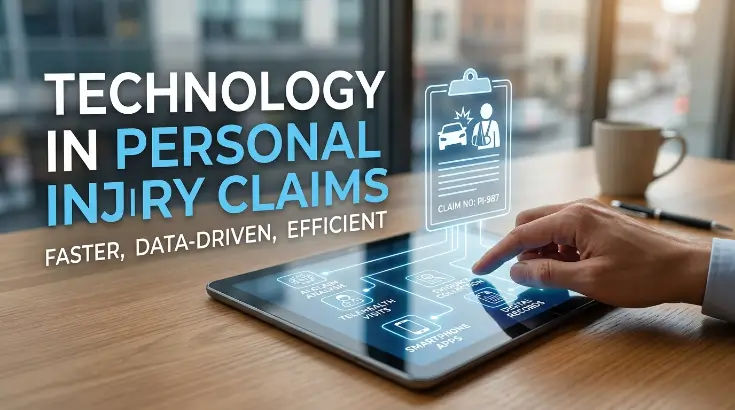
Technology has changed almost every part of modern life, from the way people communicate to how businesses operate. It is also playing an increasingly important role in personal injury claims. After an accident, digital records, mobile devices, cameras, and other technologies can help establish what happened and provide important evidence.
For people dealing with the consequences of an accident, understanding how technology can support a claim may make the legal process easier to navigate.
Digital Evidence After an Accident
One of the biggest changes in personal injury cases is the growing availability of digital evidence. Smartphones can record photographs, videos, location information, messages, and other details that may help establish the circumstances surrounding an accident.
For example, someone involved in a vehicle collision may be able to preserve photographs of the vehicles, road conditions, traffic signs, and visible injuries. Dashcam footage can also provide a useful record of events immediately before and during a crash.
Because digital information can sometimes be deleted or overwritten, preserving potentially relevant evidence as soon as possible can be important.
How Cameras Can Help Establish What Happened
Security cameras and traffic cameras are another valuable source of information. Businesses, parking facilities, intersections, and residential properties may have cameras that captured an accident.
Video evidence can sometimes help clarify questions such as:
- How did the accident happen?
- Which vehicle had the right of way?
- Was a driver distracted?
- Were unsafe conditions present?
- How quickly did the people involved react?
Not every camera recording is retained indefinitely, so identifying potential sources of video evidence promptly can be helpful.
Smartphones and Accident Documentation
Smartphones have made it easier for people to document an accident scene. Photos can preserve details that might otherwise disappear, including vehicle damage, road conditions, weather conditions, property damage, and visible injuries.
However, people should prioritize safety first. If an accident has caused serious injuries or created a dangerous situation, obtaining medical attention and contacting the appropriate authorities should come before taking photographs.
It is also useful to keep copies of relevant photographs, documents, medical records, and communications rather than relying on a single device or application to preserve them.
Vehicle Technology and Accident Reconstruction
Modern vehicles contain increasingly sophisticated technology. Depending on the vehicle and circumstances, electronic systems may store information related to speed, braking, steering, and other driving events.
Investigators and qualified experts may use available vehicle data alongside photographs, witness statements, police reports, and other evidence to better understand how a collision occurred.
This technology can be particularly useful when the people involved provide conflicting accounts of an accident.
Social Media Can Also Become Evidence
Social media is another area that accident victims should consider carefully. Posts, photographs, videos, comments, and other online activity may potentially be reviewed during a legal dispute.
For example, posting photographs that appear inconsistent with claimed injuries could create unnecessary questions about a person’s condition. Even an innocent post can sometimes be misunderstood when viewed without the surrounding context.
For this reason, accident victims should be thoughtful about what they share online while a claim is being investigated or pursued.
Technology Does Not Replace Legal Guidance
Although technology can provide valuable evidence, collecting information is only one part of a personal injury claim. Determining liability, evaluating damages, communicating with insurance companies, and understanding applicable state laws can require professional legal assistance.
People injured in South Carolina may want to speak with an experienced personal injury law firm about their situation. Solomon Law SC represents injury victims in matters including auto accidents, truck accidents, motorcycle accidents, catastrophic injuries, workers’ compensation, and other personal injury cases.
Protecting Important Information After an Accident
A few practical steps can help preserve potentially useful information:
- Take photographs when it is safe to do so.
- Keep copies of medical records and accident-related documents.
- Save relevant messages, emails, and photographs.
- Note the names and contact information of witnesses.
- Avoid deleting potentially relevant digital information.
- Be cautious about discussing the accident publicly on social media.
- Consult a qualified professional if you are unsure about your legal options.
The Future of Personal Injury Cases
As technology continues to develop, digital evidence will likely become an even more important part of personal injury investigations. Artificial intelligence, connected vehicles, smart cameras, GPS systems, and other technologies may provide investigators with increasingly detailed information about accidents.
At the same time, technology works best when combined with traditional evidence and careful legal analysis. Police reports, medical documentation, witness testimony, photographs, and expert opinions can all contribute to a clearer understanding of an injury claim.
For accident victims, knowing what technology can document—and preserving that information properly—can be an important step toward understanding what happened and determining what options may be available.
 IQnewswire
 Rizwan Aslam
[…] READ ALSO: How Technology Is Changing Personal Injury Claims […]