
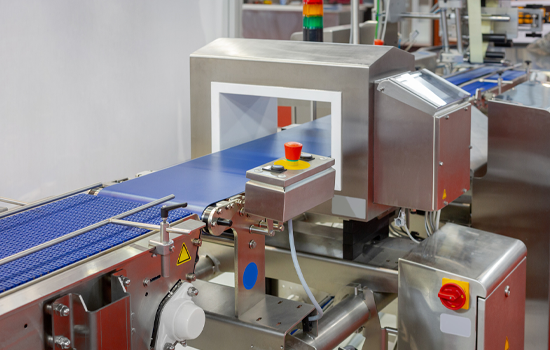
safety matters in every food production line. Even small metal contamination can cause serious risks. It can damage machines. It can harm consumers. It can also create product recalls.
Now food factories use advanced detection systems to avoid these risks. One key solution is a food metal detector system. It helps find metal pieces inside food before packaging.
Modern machines use smart sensing methods. They work fast and support large-scale production. In this guide, you will learn how these systems work, what technologies they use, and how beginners can understand them in a simple way.
How Food Metal Detector Machines Work
Food metal detectors use electromagnetic fields. These fields scan food products as they move on a conveyor belt.
When metal enters the field, the system detects a change. The machine then sends a signal. It may trigger an alarm or remove the product from the line.
Next, the system separates metal types:
- Ferrous metals (iron-based)
- Non-ferrous metals (aluminium, copper)
- Stainless steel (hard to detect)
Each type reacts differently. Modern systems adjust sensitivity based on product type. This helps reduce false alerts and improve accuracy.
Top Technologies Used in Food Metal Detection
1. Balanced Coil Technology
This is the most common method. It uses three coils placed in a balanced system. The middle coil sends the signal. The outer coils receive it.
When metal enters, balance changes. The system detects it instantly. This method works well for packaged and unpackaged foods.
2. Multi-Spectrum Detection
This technology uses multiple frequencies. It checks the product from different angles.
Now the system can handle complex foods like cheese, meat, and bakery items. Moisture and salt do not affect results as much.
3. Phase Detection Technology
This system studies phase changes in signals. It helps separate product signals from metal signals.
As a result, factories reduce false rejects. This improves production flow.
4. X-ray Inspection Systems
X-ray systems do not rely on electromagnetic fields. They use radiation imaging.
They detect metal, glass, stone, and dense plastic. Many large factories use both X-ray and metal detection together for full safety control.
Best Tools in Food Metal Detection
Now, let’s look at some trusted tools used in the industry. These brands support global food safety standards.
1. Mettler-Toledo
This company provides advanced metal detection systems. Many food factories use their machines for high-speed production lines. Their systems focus on accuracy and stability.
2. CEIA
CEIA builds high-sensitivity detectors. Their systems work well in meat, dairy, and bakery industries. They focus on deep detection control.
3. Ishida
Ishida offers integrated inspection systems. Their machines combine weighing and metal detection in one setup. This helps improve production efficiency.
4. Newgoer
Newgoer Official Website provides industrial inspection solutions for food safety. Their systems focus on food processing lines that need stable metal detection. Many manufacturers use such platforms when selecting equipment for quality control.
Now you can also explore the Top Food Metal Detector Machine options through this source to understand available machine types and features.
Benefits of Food Metal Detector Machines
- Food metal detectors bring strong advantages to food production systems.
- First, they protect consumers from contamination. Safety improves trust in food brands.
- Next, they reduce product recalls. This saves cost and brand reputation.
- At the same time, they help meet global food safety standards like HACCP guidelines from the Codex Alimentarius Commission (FAO/WHO). These standards require strict hazard control in food production.
Finally, they support automation. Factories run faster with fewer manual checks.
Limitations You Should Know
Even advanced systems have limits. Some products with high moisture or salt content can affect detection accuracy. Strong product effects may reduce sensitivity. Also, very small stainless-steel particles remain hard to detect in some cases.
Now, X-ray systems solve many of these issues, but they cost more than standard detectors. Maintenance also matters. Without proper calibration, performance drops over time.
Tips for Beginners
If you plan to use or select a food metal detector system, follow these simple tips:
- Choose a system based on your product type
- Test sensitivity with real production samples
- Keep calibration schedules regular
- Train staff for proper handling
- Use combined inspection systems for higher safety
As a result, you reduce errors and improve production quality.
Conclusion
Food metal detector technologies play a key role in modern food safety. They protect consumers, support compliance, and improve production control.
Now you understand how different technologies work, what tools the industry uses, and what challenges exist in real environments.
If you want to explore reliable inspection systems and learn more about industrial solutions, you can review the Top Food Metal Detector Machine options through Newgoer Official Website.
Strong food safety starts with the right detection system.
 IQnewswire
 Kaif
Kaif